
It happened in the most ordinary, almost forgettable moment.
I was hugging my dog—cradling him the way one might carry a small child. I patted his back, stroked his fur, and told him what a good boy he was. He must have felt the affection, because in return, he turned and licked my ear.
Warm, wet dog saliva—straight into my ear.
I recoiled. “Yuck.”
And then I thought nothing more of it.
But a few days later, the pain began.
At first, it was mild. Then it grew into something sharp and relentless—like someone stabbing my eardrum with a pencil. The nights became unbearable. Sleep was no longer restful, but a struggle. Painkillers dulled the sensation slightly, but never fully. The discomfort lingered, constant and intrusive.
Yet what struck me most was not the pain itself—but how my mind responded to it.
The Mind’s Conditioning
In those long, sleepless nights, I began to observe something familiar yet often unnoticed: the mind does not simply experience pain—it reacts to it.
And these reactions are not random. They are conditioned.
From a young age, we are taught—by family, society, media, and even religious ideas—how to interpret and respond to life. Without realizing it, we inherit patterns of thinking.
So when the pain arose, my mind followed its training:
- It blamed: Why did my dog do that? Why did I let him?
- It catastrophized: What if this gets worse? What if I need surgery? What if I die on the operating table?
- It searched for meaning in superstition: Is this punishment? Bad karma? Did I harm someone in a past life? Is this black magic?
Lying awake at 3 a.m., with a throbbing ear, I was not just experiencing physical pain. I was drowning in anxiety, fear, and aversion.
The suffering had multiplied.
The Buddha’s Teaching of the Two Arrows
In the Sallatha Sutta, the Buddha offered a powerful analogy.
When an uninstructed person experiences pain, they are struck by two arrows.
The first arrow is physical—the unavoidable pain of the body.
The second arrow is mental—the sorrow, fear, resistance, and stories we add on top of the pain.
It is as if a man, already pierced by one arrow, is struck again by another.
In that moment, lying in bed, I could see clearly: my ear infection was the first arrow.
But all the spiraling thoughts—the blame, fear, and speculation—were the second.
And that second arrow was optional.
Turning Inward
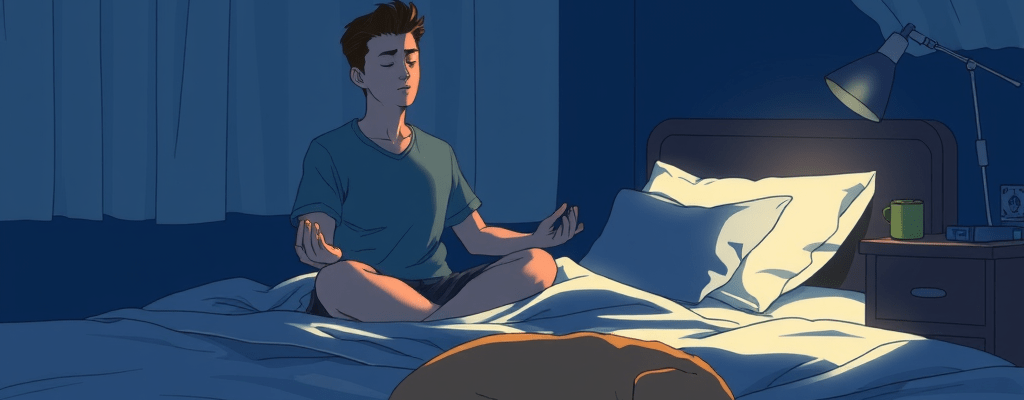
Since sleep was out of reach, I decided to sit with the experience instead of fighting it.
I turned to meditation.
Gently, I brought the mind to stillness. I recalled the teaching of emptiness—that experiences arise and pass, not belonging to a fixed “self.” I shifted my perspective, observing the pain as if from a distance, rather than claiming it as mypain.
I reminded myself:
Pain, sickness, and even death are part of life.
This, too, is not personal.
Then I leaned into letting go.
Let go of the body.
Let go of the resistance.
Let go of the story.
I placed my attention on the breath.
In… out…
In… out…
At first, the pain was loud, demanding attention. But as the mind settled, something subtle began to happen. The pain did not disappear entirely—but it softened. It receded into the background, no longer the center of my awareness.
And in that quiet space, rest became possible.
A Simple but Profound Insight
The experience left me with a simple yet profound realization:
Pain is inevitable.
Suffering is often optional.
We may not always control what happens to the body—illness, injury, discomfort. These are part of being human.
But we can learn to see the second arrow as it arises.
We can recognize the patterns of the mind—the blame, the fear, the endless “what ifs”—and choose not to follow them.
This does not require perfection. Only awareness.
Because sometimes, the difference between a sleepless night of torment and a moment of quiet acceptance…
is not the absence of pain, but the absence of the second arrow.
May all be well and happy.
Categories: Articles
 I am just an ordinary guy in Singapore with a passion for Buddhism and I hope to share this passion with the community out there, across the world.


 Bodhi-Bowl