It’s the first day of the New Year, 2026, and I’m spending it the local way—visiting temples and making donations alongside Bangkok residents.
My plan for the day was to visit Wat Paknam, but before that, I decided to stop by a nearby local market known as Talat Phlu.
This neighbourhood gained recent fame after appearing in the popular Thai movie How to Become a Millionaire Before Grandma Dies, with many scenes filmed right here.
Brunch at Talat Phlu
My first stop was a restaurant called Tek Heng, known for its signature dish: crispy noodles. The tiny, fine noodles were surprisingly enjoyable, almost like a savoury snack. They came with preserved vegetables on the side, whose acidity balanced the richness of the deep-fried noodles nicely. I ordered a small portion since I wanted to try other dishes as well.
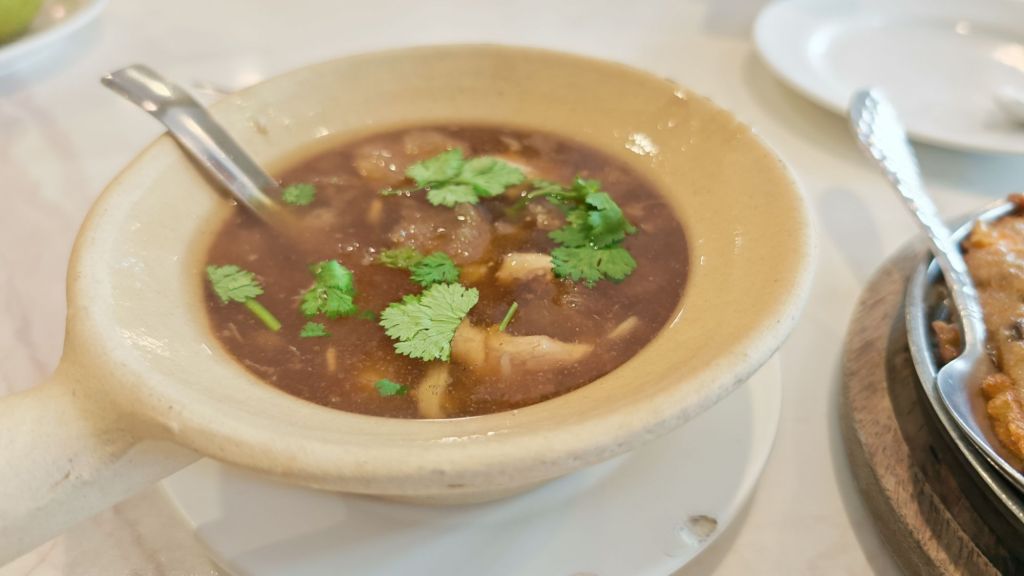
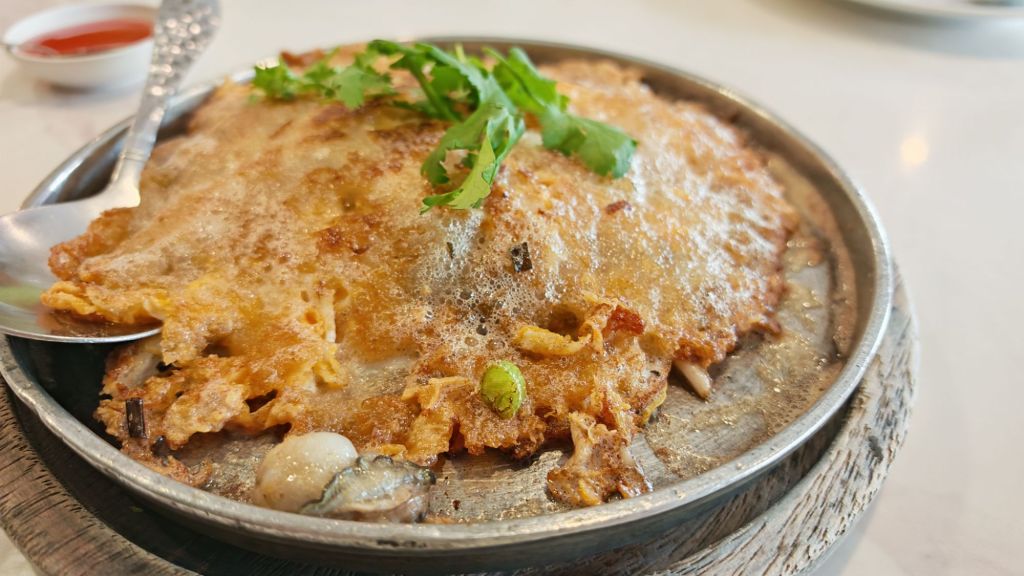
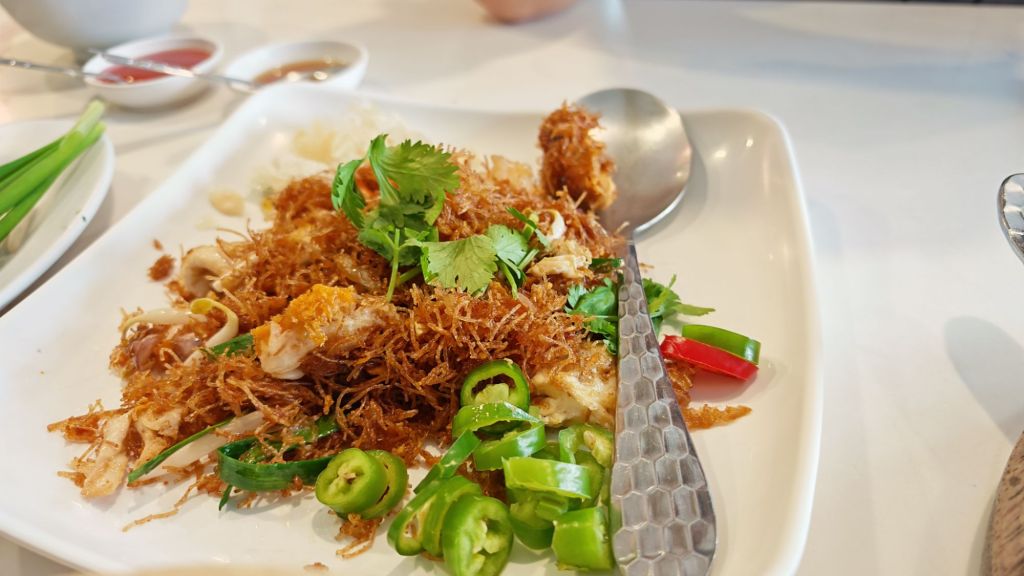
Overall, the crispy noodles stood out as something I had never eaten before. The rest of the dishes were well executed, though they didn’t offer any major surprises in flavour.
Exploring the Market
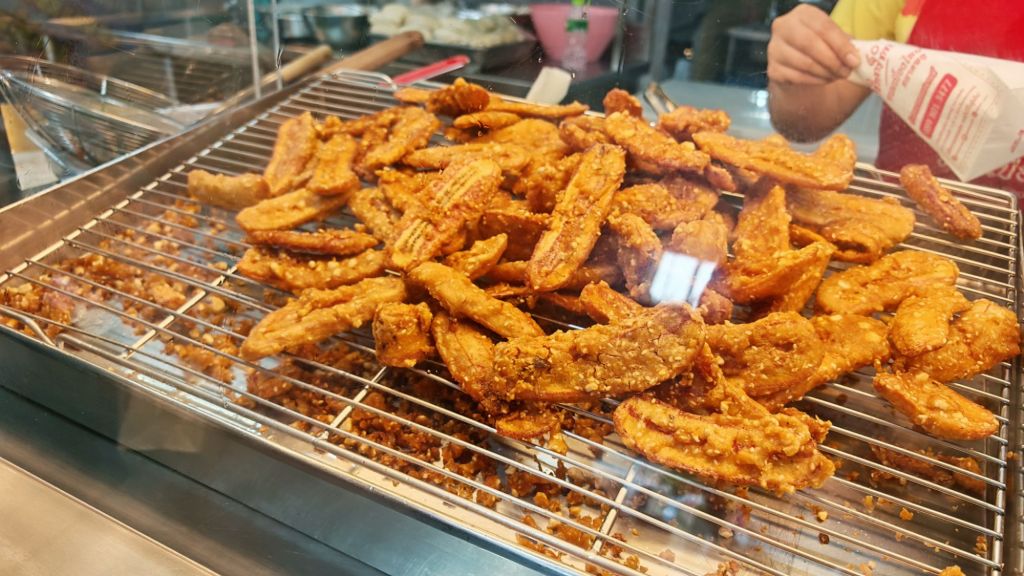
After brunch, I stepped out to explore Talat Phlu itself. Right outside the restaurant is a food market tucked beneath an expressway. Some stalls were closed for the New Year holiday, but I still managed to sample a few delicious street snacks.

A short walk further brought me to a shop specialising in traditional Thai desserts. It was clearly popular with locals—you even need to take a queue number to place an order. Seeing the shop filled with Thai housewives was a sure sign of quality. Even though I had just eaten, I decided to buy some colourful kanom wan to enjoy later.
The process was an experience in itself. First, you grab a laminated green slip with a number from a small plastic box hanging on the wall near the entrance. Then you stand patiently opposite the counter, holding your number where the staff can see it—perhaps giving a friendly wave now and then. The numbers were called out in Thai, which I couldn’t follow at all, so I simply smiled, stayed polite, and waited.
Somehow, the magic of Thai hospitality worked in my favour. I was called up fairly quickly—perhaps my slightly confused expression helped. The queue system is necessary, as the counter displays a large variety of desserts behind glass, and crowding would make things chaotic. I pointed to whatever caught my eye and ordered five different varieties. Each piece was carefully wrapped in banana leaves—a lovely touch that explained why the process couldn’t be rushed.
All these steamed cakes cost only THB 65.
Wat Khun Chan
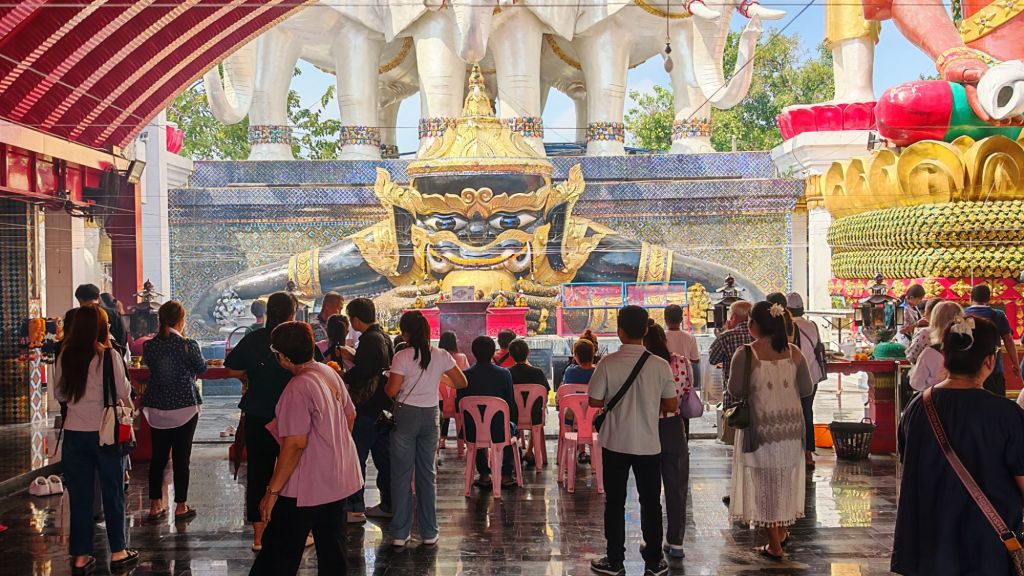


Next, I walked about six minutes to Wat Khun Chan. The temple was bustling with locals praying for a good year ahead, giving the place a festive atmosphere. Located beside the famous Giant Buddha temple, Wat Khun Chan feels more colourful and vibrant in comparison.
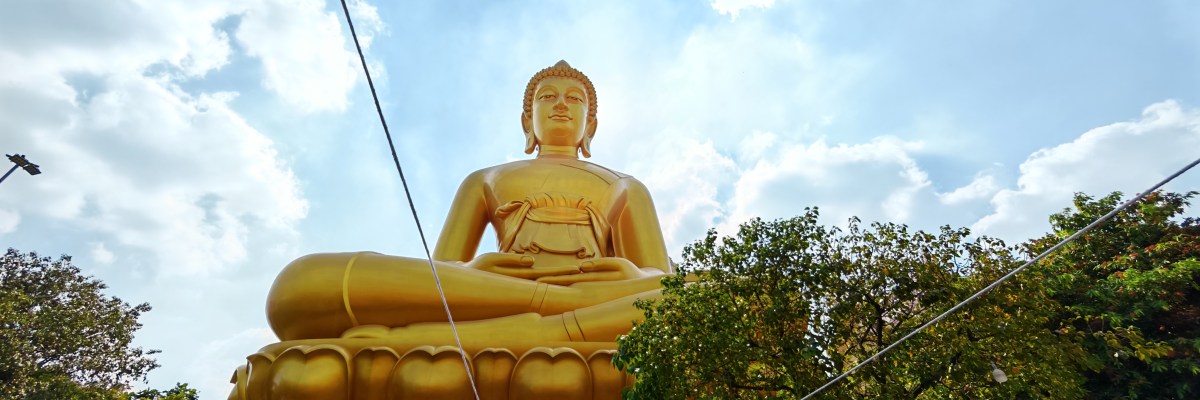
The temple also has a large Buddha statue, uniquely designed with the deity Rahu positioned at its base. A huge canopy shelters devotees from the sun, but it also partially obscures the Buddha, drawing visual focus instead to Rahu below. Locals believe Rahu removes obstacles from one’s life, and offerings made to him are traditionally black in colour.
For a purist Buddhist, such practices might invite a quiet tsk tsk. But to me, it’s a reminder that most people aren’t seeking lofty doctrinal wisdom—they’re looking for reassurance, comfort, and the feeling that benevolent forces are watching over them.
Wat Paknam
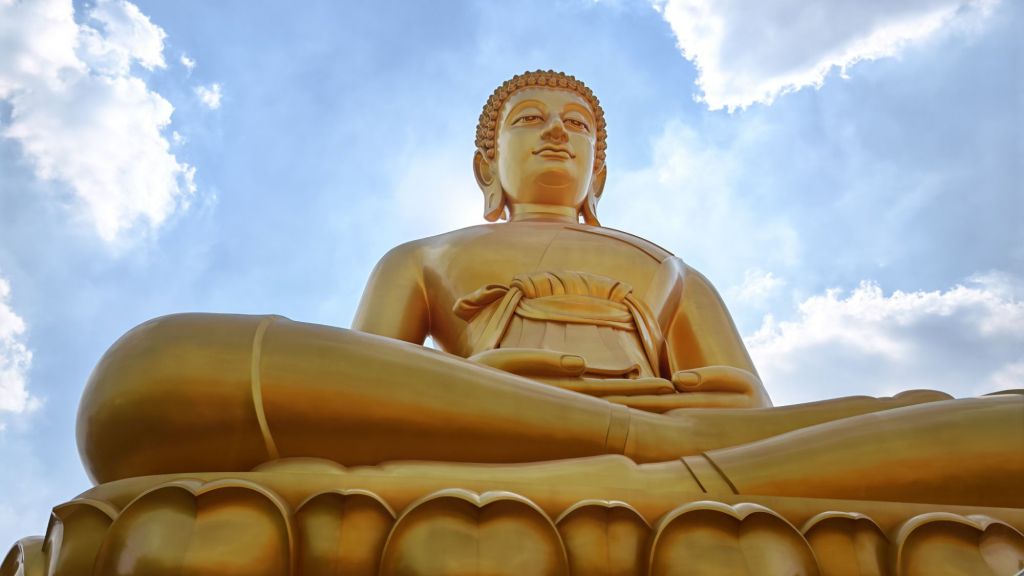
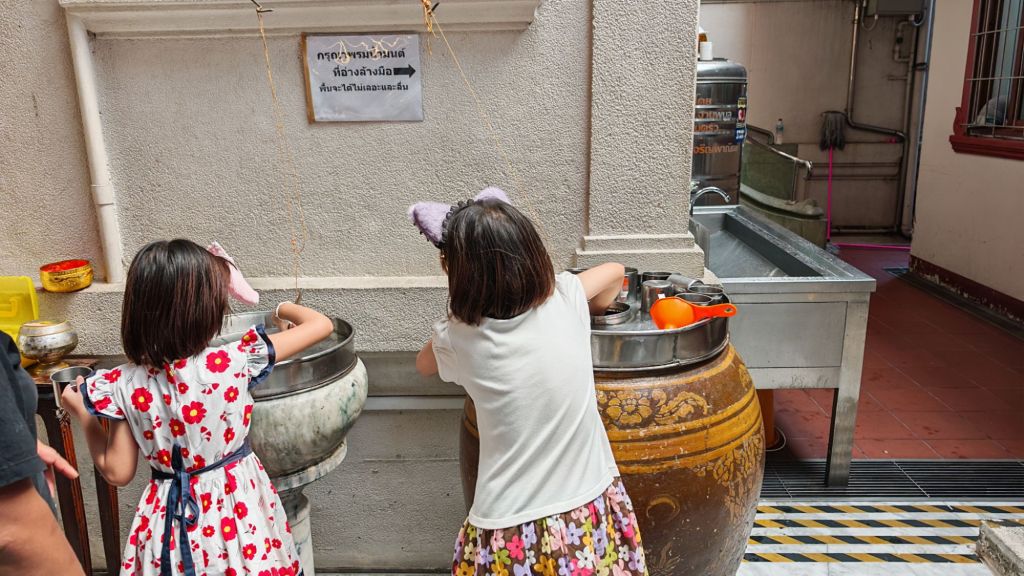
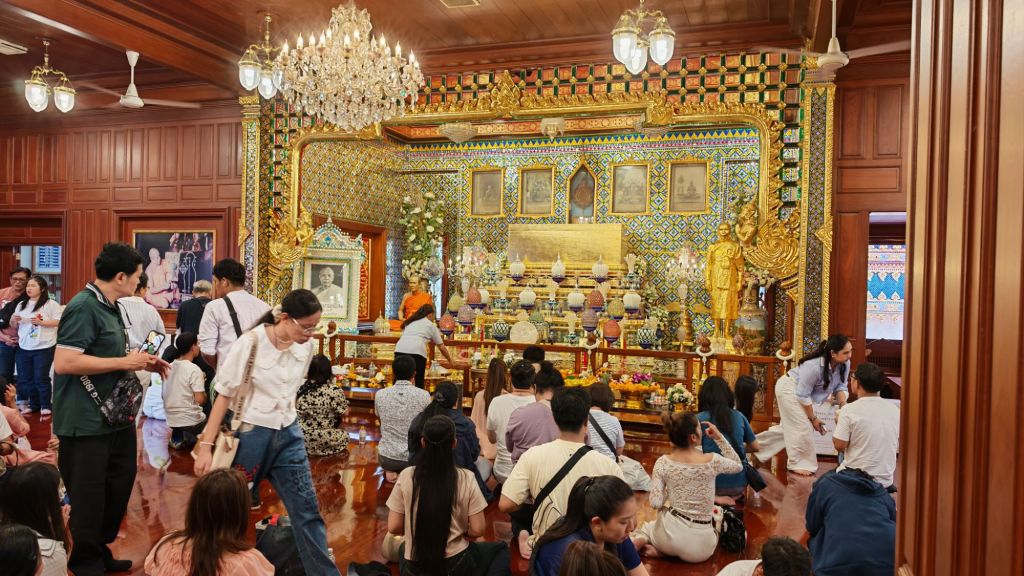
After Wat Khun Chan, I crossed a small footbridge over the canal to reach Wat Paknam, the temple with the Giant Buddha that often appears on Bangkok’s tourism posters. (Note: the footbridge is just beside the statue of Rahu)
Beyond the massive statue, there are three other notable points of interest here. First is a golden casket on Level 2 containing the sacred remains of the founding abbot of Wat Paknam. Many devotees pray to him, regarding him as an enlightened monk, and his image can still be found on altars throughout Thailand.
I placed my donations into the box designated for supporting the monks. Incidentally, my blog advertisements have earned a total of USD 16 over more than five years. Since that income came from readers visiting my site, I donated it here and dedicated the merits to everyone. Wishing all a happy and wholesome New Year.
Next, I went to the canal behind the temple to feed the fish. For THB 10, you can buy fish food and feed the large schools living in the water. Nearby is a small garden where I decided to enjoy the desserts I bought earlier at Talat Phlu. The area was lively and crowded because of the New Year holiday. Temple volunteers were offering free coffee and food, and many people were gathered there eating together.
On a normal day, I imagine this garden would be a much calmer place to sit and reflect.
The final stop was the Giant Buddha itself and the pagoda building beside it. Inside is an impressive glass pagoda, along with various artefacts collected throughout the long history of Wat Paknam.
That concludes my first day of 2026—simple, meaningful, and quietly joyful.
May all be well and happy.
Categories: Travel
 I am just an ordinary guy in Singapore with a passion for Buddhism and I hope to share this passion with the community out there, across the world.


 Bodhi-Bowl