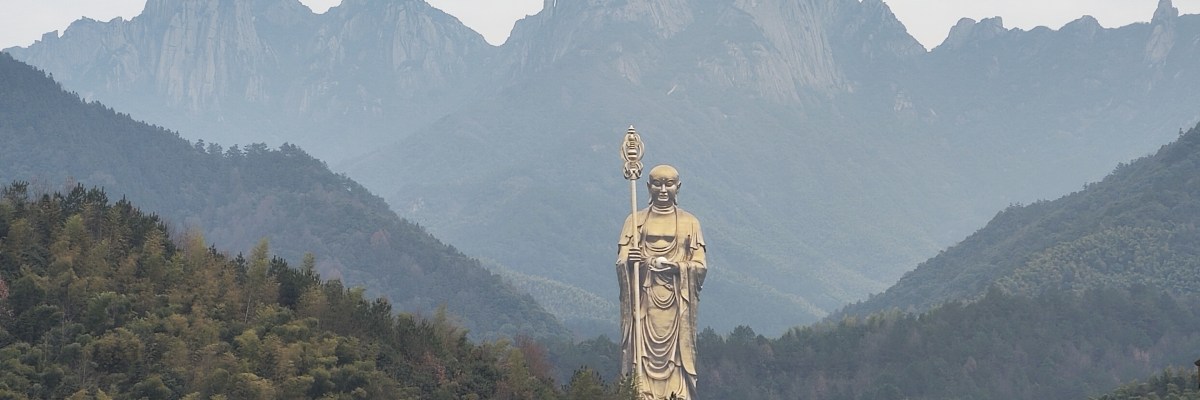
There are four sacred mountains in Chinese Buddhism, and Mount Jiu Hua is one of them. Each mountain is associated with a specific Bodhisattva, making them significant pilgrimage destinations. Mount Jiu Hua, in particular, is dedicated to Kṣitigarbha Bodhisattva, whose vow to delay his enlightenment until all beings are freed from hell has inspired countless people.
This vow resonates deeply with many because it seems like an impossible task. Countless sentient beings are drawn to evil, pursuing selfish goals that perpetuate suffering. Enlightenment, or Nirvana, represents the ultimate state of happiness. To postpone it in order to aid those in hell is akin to sacrificing a peaceful retreat at a resort in order to help people in a war-torn zone—an act of extraordinary compassion, wouldn’t you agree?
However, do you know that, according to Buddhist mythology, there will come a time when all the hells will be emptied? This will occur only when the world system is on the verge of complete annihilation, though that day is still a long way off.
I was really excited to visit Mount Jiu Hua, as it would mark the completion of three out of the four famous pilgrimage mountains in Chinese Buddhism. The other two mountains I had already visited were Mount Emei, dedicated to Samantabhadra Bodhisattva, and Mount Wutai, dedicated to Manjushri Bodhisattva. The last mountain left for me to complete the pilgrimage is Mount Putuo, which is dedicated to Avalokiteshvara Bodhisattva.
I was a bit concerned that Mount Jiu Hua might be snow-covered, with transportation possibly suspended, so I decided to stay at the foot of the mountain instead of on it. However, my worries turned out to be unfounded when I arrived on December 26, 2024.
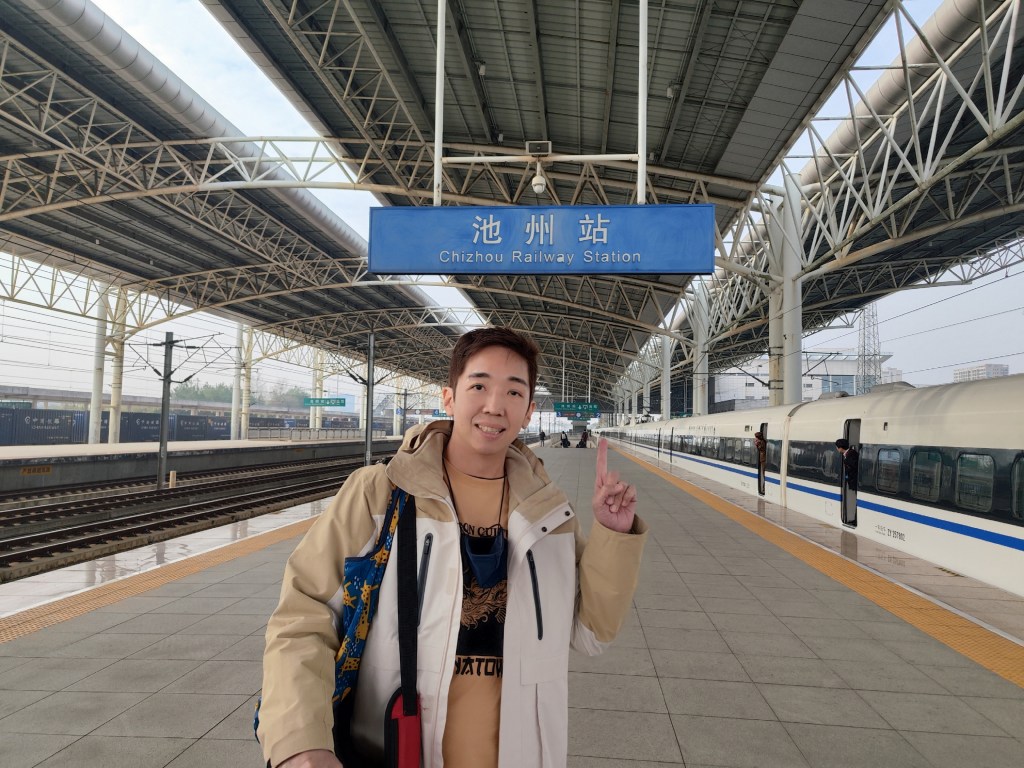
To get to Mount Jiu Hua, I traveled by high-speed rail from Wuhan and arrived at Chizhou (池州) station. From there, I took a cab for about an hour to reach the mountain. Afraid that the driver might take unnecessary detours or lead me to unknown places, I kept the Chinese GPS on throughout the journey. I suppose I watched too many crime dramas, but humorously, the driver followed the GPS instructions to the letter. The GPS even provided driving tips like “slow down, traffic police ahead,” and the driver actually slowed down. I guess that’s why it took an hour to get to my destination!
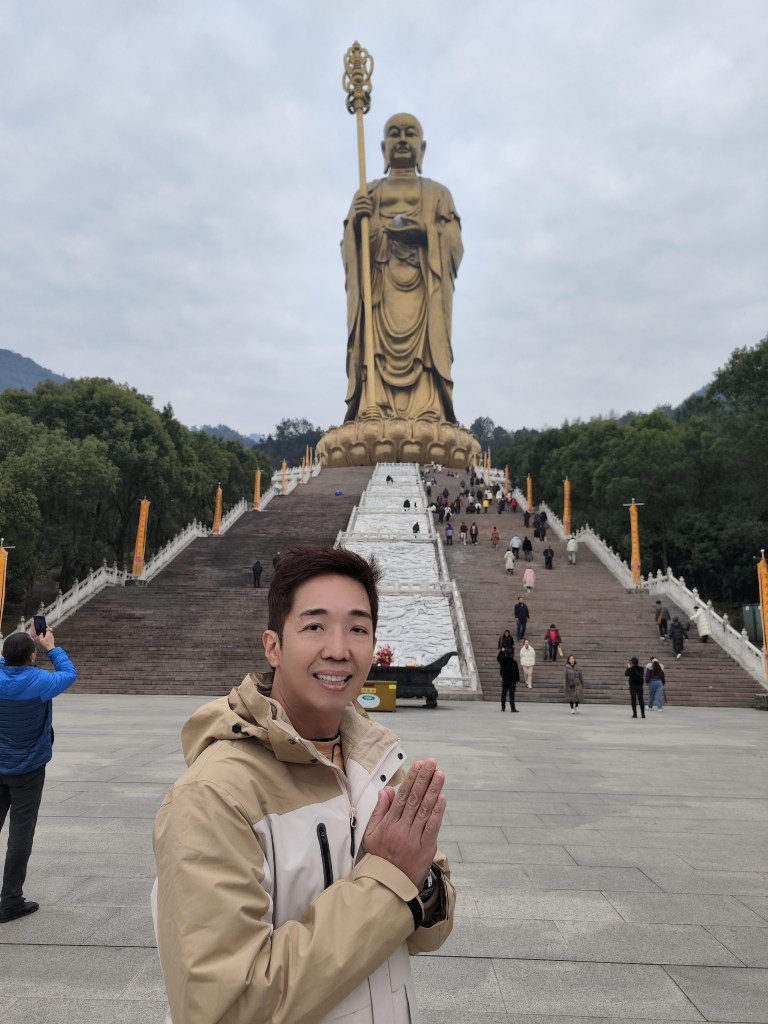
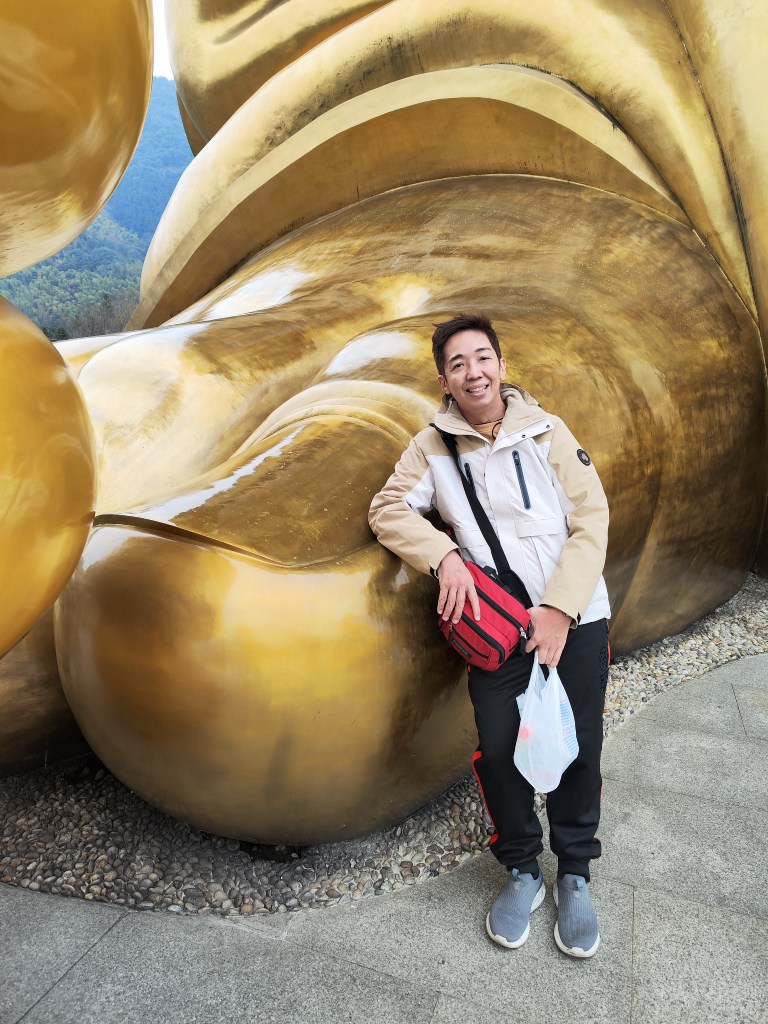
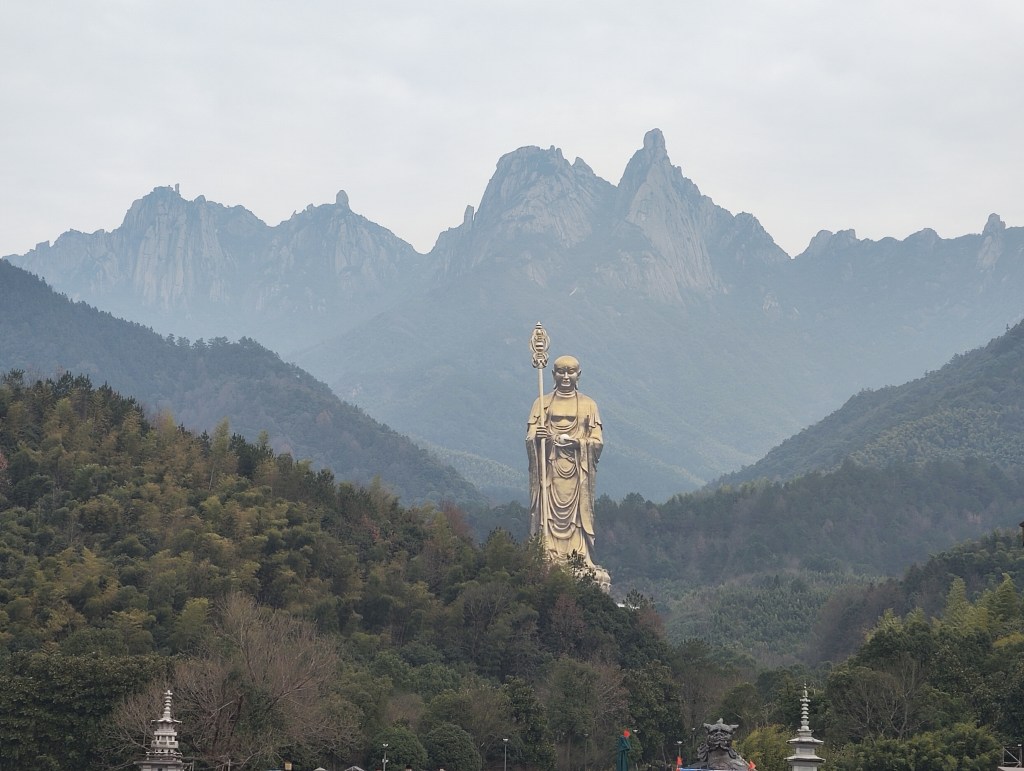
The first stop on my itinerary was to visit the giant statue of Kṣitigarbha Bodhisattva. While most other Bodhisattvas are depicted as lay people with hair, Kṣitigarbha is the only one portrayed as a monk. This representation dates back to when a Korean monk arrived at Mount Jiu Hua to spread Buddhism. After his passing, people began to regard him as a manifestation of the Bodhisattva, and this is why Chinese artwork of Kṣitigarbha often shows him as a monk.
The statue is open to the public with no admission fee! However, at the entrance stands a modern building with Buddhist design elements. Touring this building requires an admission fee, which I chose to pay. Unfortunately, I soon discovered that the building had been overtaken by a business. The tour included a guide who seemed more interested in selling souvenirs than providing meaningful insights. She weaved superstitious tales about wish-fulfilling glass globes, spirit-controlling seals, and other trinkets. I was too polite to walk away, but it quickly became tiresome as she pushed these items.
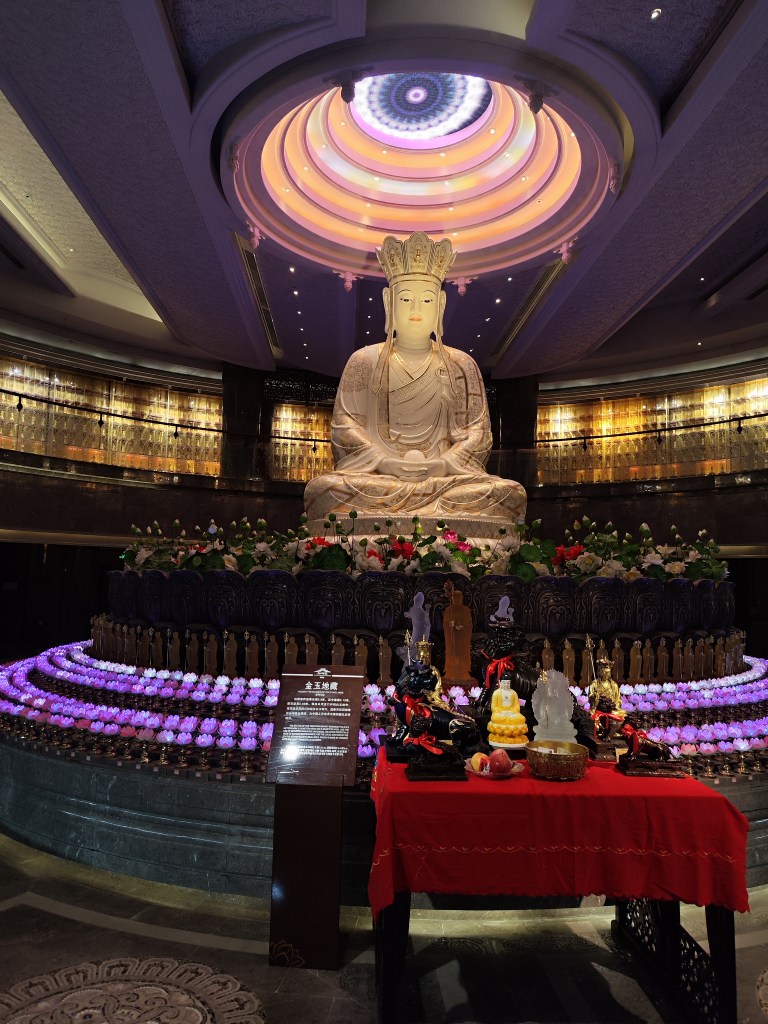
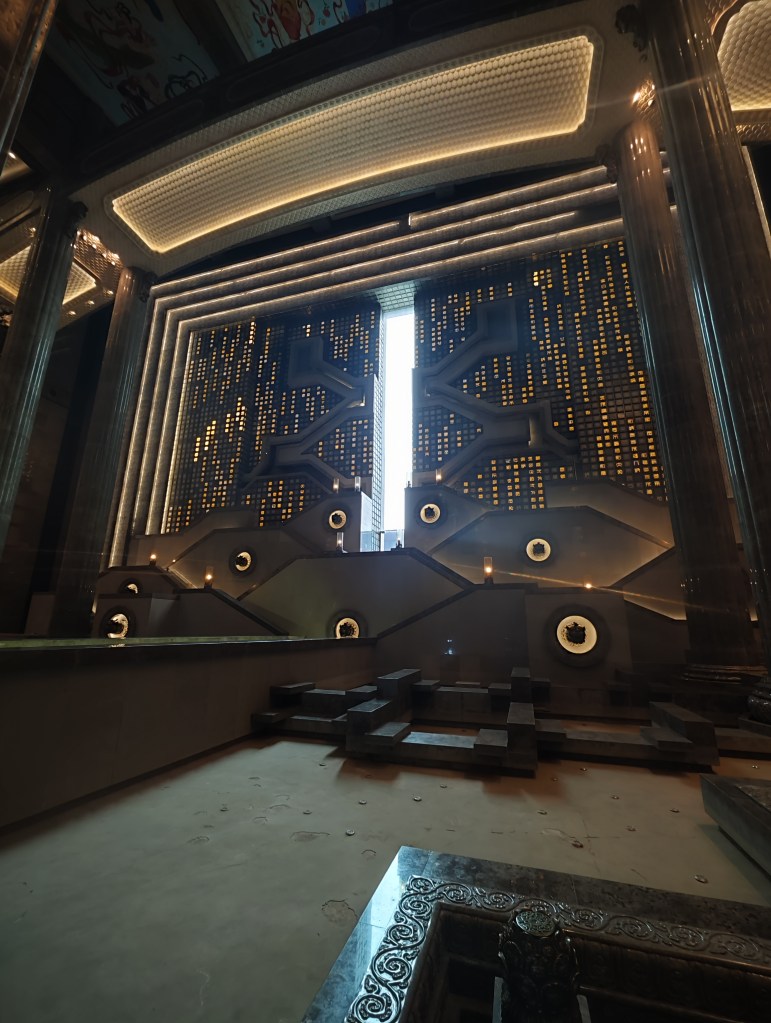
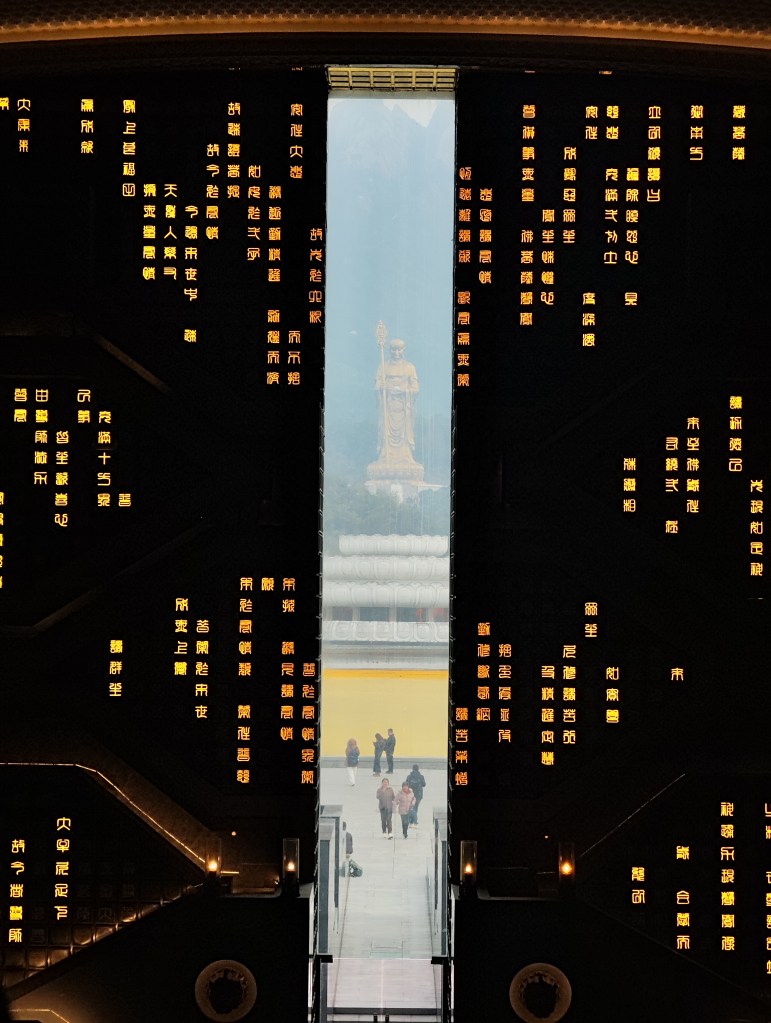
I would not recommend visiting this place if it is still operated by a business. While the interior does feature some nice design elements, the experience is spoiled by various counters selling amulets, statues, and other religious goods at steep markups—simply because they are “specially consecrated” at this holy mountain.
One particular experience during this pilgrimage left a deep impression on me: hearing the toll of a mysterious bell in my head. The sound was sharp yet mellow, with a deep, resounding toll. The first time I heard it was shortly after checking into my hotel, and then I would hear it intermittently, about once every few hours. I heard it while circumambulating the giant statue of Kṣitigarbha and even the next day. Perhaps I was imagining things, but it left a lasting impression on me, and I chose to believe it was a holy connection.
Hotel
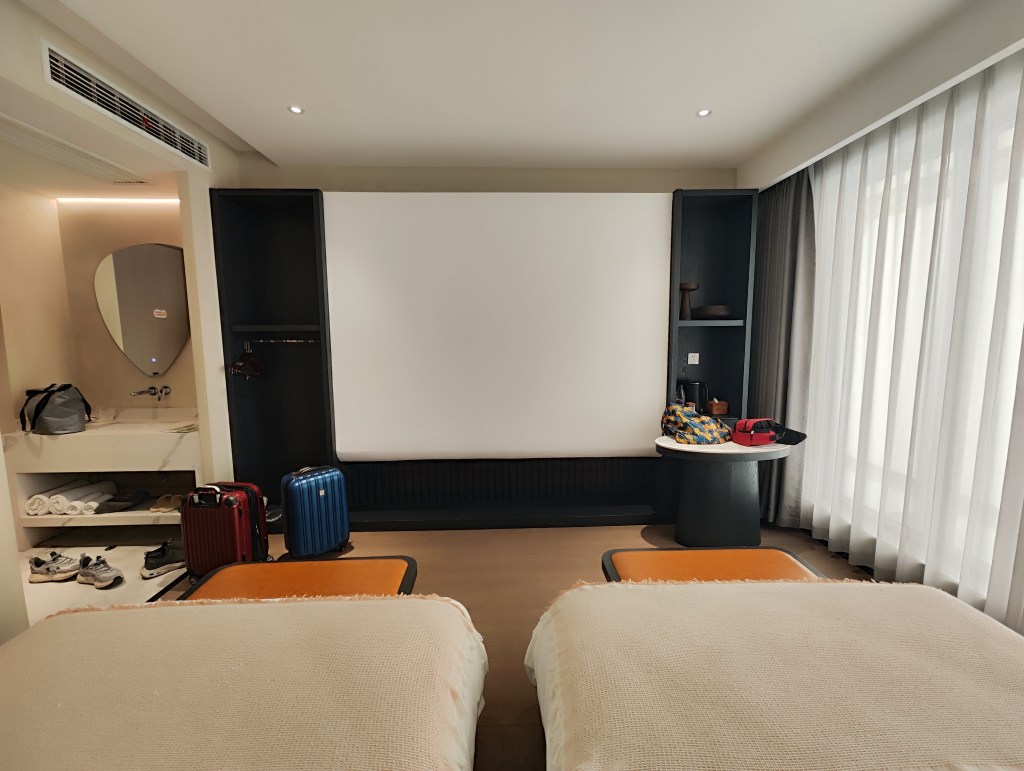
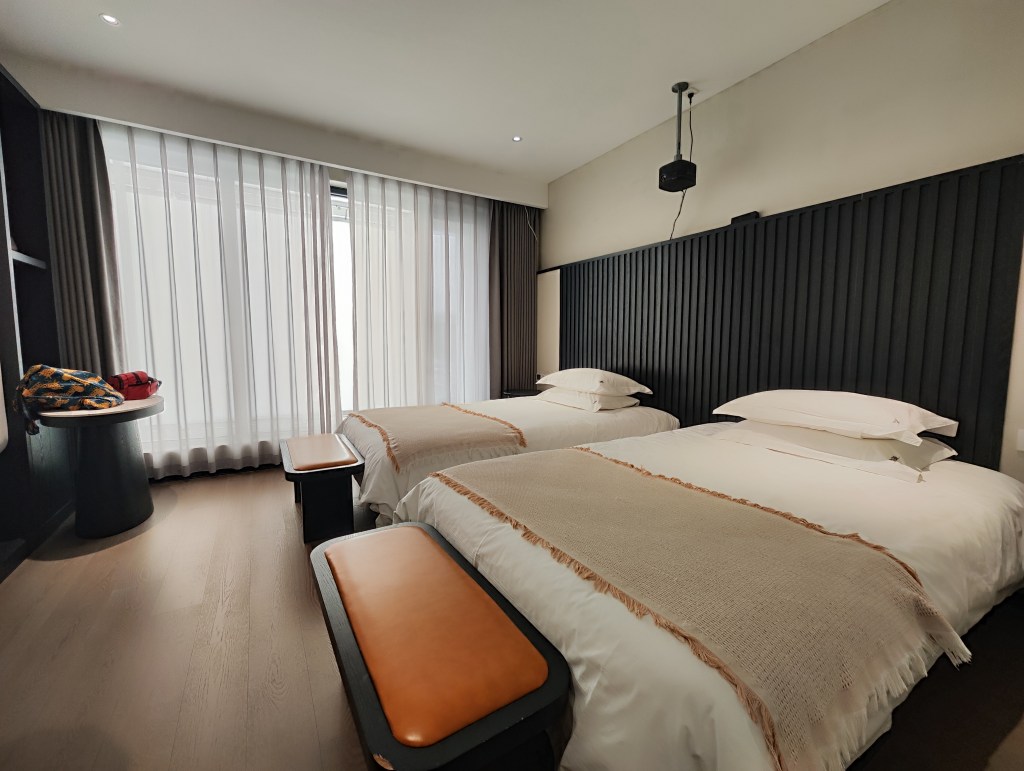
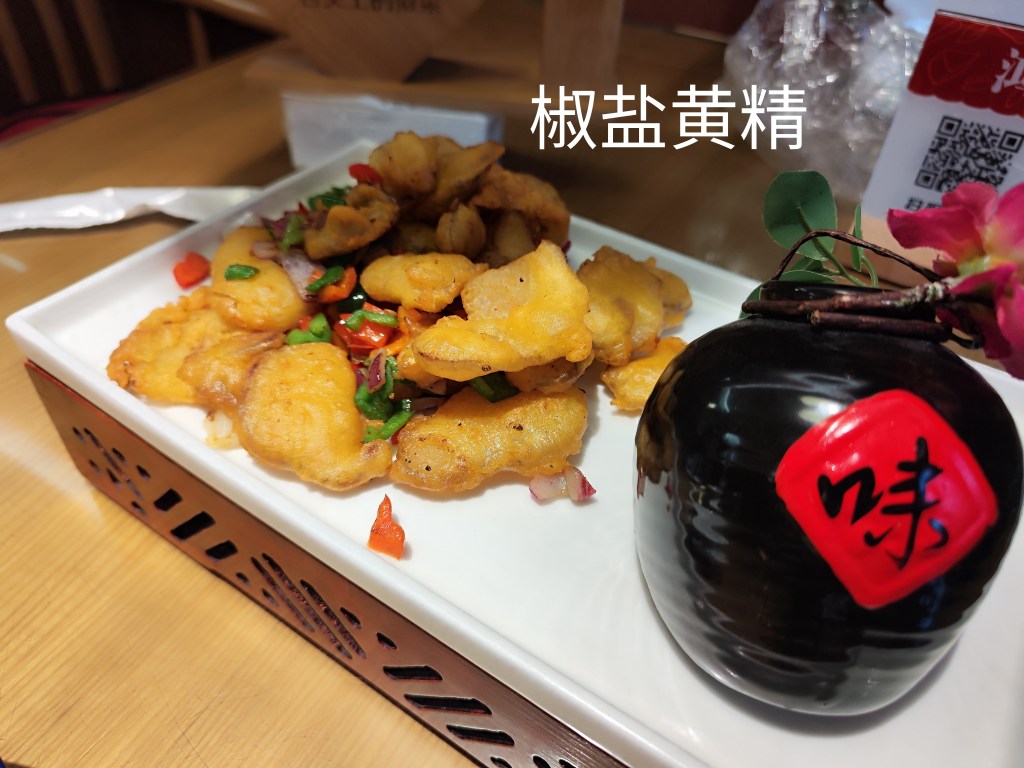
My hotel room was quite comfortable, complete with a large projector TV. It was conveniently located just across from the bus terminal, which offers transportation to the various peaks of Mount Jiu Hua, home to the ancient monasteries I planned to visit the next day. For now, though, it was time to have dinner after my visit to the giant statue. Just across from the bus station, there’s a small town with a mix of hotels, souvenir shops, and restaurants.
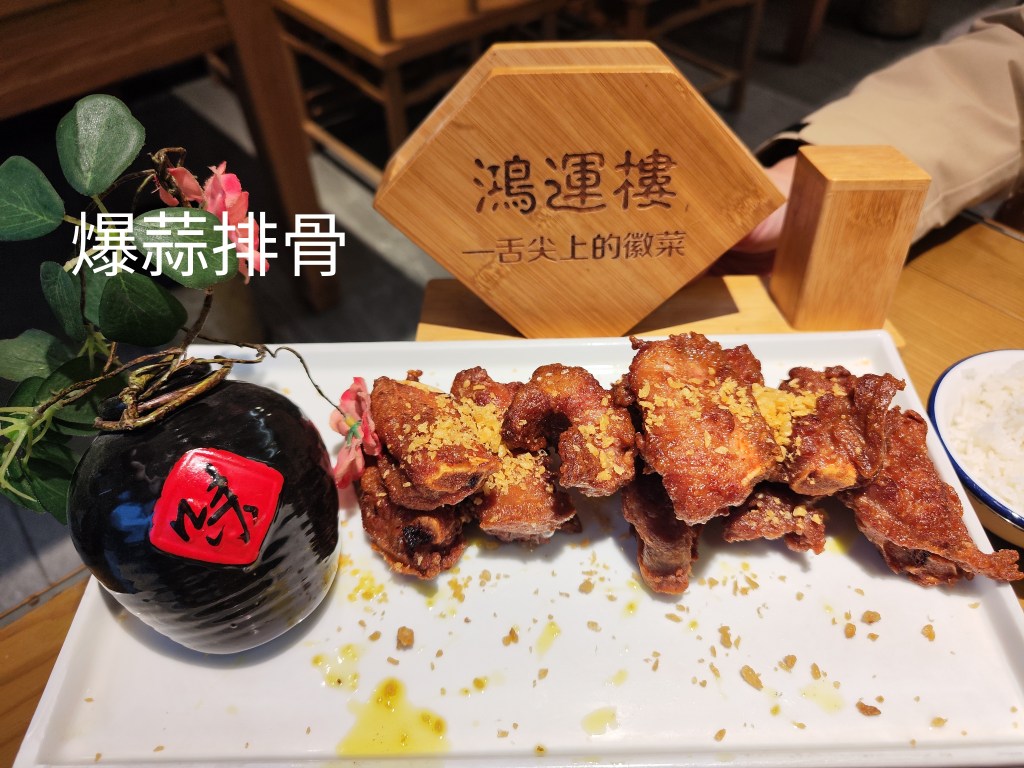
Dinner

May all beings be well and happy.
Categories: Travel
 I am just an ordinary guy in Singapore with a passion for Buddhism and I hope to share this passion with the community out there, across the world.


 Bodhi-Bowl
