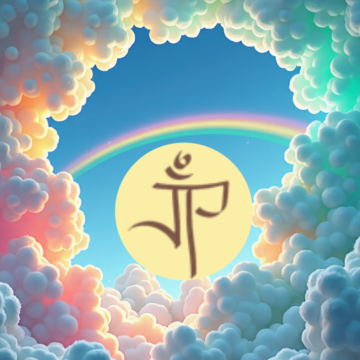

Sugata: The Fifth Honorific of the Buddha
The fifth honorific of the Buddha, Sugata, carries profound meaning in Buddhism. Derived from “gata,” meaning “gone,” and “su,” meaning “well,” Sugata can be translated as “well-gone” or “fared well.” Together, it conveys the idea of a purposeful journey completed—one who has achieved the highest goal (attained Nirvana, taught the Dharma) and then, departed from suffering with perfection. To fully appreciate this honorific, we must explore the concept of Nirvana and adopt a mature Buddhist perspective on spiritual practice.
Understanding Sugata and Nirvana
The honorific Sugata reflects the Buddha’s attainment of Nirvana and his demonstration of Parinirvana—the final liberation after the death of his physical body. Nirvana represents freedom from samsara, the endless cycle of birth, death, and suffering. While alive, the Buddha’s mind was free from samsara, even though his body remained in the world. Upon his death, he entered Parinirvana, permanently leaving the realm of suffering.
This milestone is celebrated in Buddhism, as it represents the ultimate conclusion of suffering. In contrast to viewing death as a loss, Buddhists see the Buddha’s Parinirvana as a triumphant departure. The honorific Sugata embodies this liberation and reminds us that the Buddha not only achieved this freedom but also demonstrated how others could follow his path.
Similarly, a Buddhist aspires for a life well-lived and then well-departed.
Maturity in Spiritual Thinking
To understand Sugata, a certain maturity in spiritual thinking is necessary. In Buddhism, the goal is not eternal reliance on the Buddha but personally attaining liberation. This sets it apart from other spiritual traditions that emphasize eternal submission to a divine lord. In Buddhism, clinging to the Buddha is considered spiritual immaturity.
An illustrative example is Ananda, the Buddha’s devoted attendant. Despite being physically closest to the Buddha, Ananda did not attain enlightenment during the Buddha’s lifetime due to his attachment. It was only after the Buddha’s Parinirvana that Ananda finally reached enlightenment, underscoring the importance of overcoming attachment—even to the teacher himself.
This perspective emphasizes that while the Buddha is a guide and teacher, the responsibility for liberation rests with the practitioner. True spiritual maturity means aspiring for Nirvana, not remaining dependent on the Buddha or his physical presence.
The Significance of Parinirvana
For Buddhists, samsara is inherently flawed, marked by impermanence and suffering. Parinirvana, therefore, is a celebrated release—a final departure from all forms of suffering. The Buddha’s Parinirvana is not mourned but revered, as it exemplifies the successful culmination of his journey.
This perspective might seem counterintuitive to those unfamiliar with Buddhist teachings. To non-Buddhists, celebrating death may appear strange or even unsettling. However, for practitioners, parinirvana is not an ordinary passing away.
What the world know as death is always tie to rebirth. This is because there is a being that is tied to theta vicious cycle.
But in Buddhism, Nirvana is also known as achieving the deathlessness. This is because one had attained freedom from a self. Thus there is no self dying and waiting to be reborn.
It symbolizes ultimate freedom and serves as a powerful inspiration. Sugata reminds Buddhists of the possibility and reality of liberation, inspiring confidence in the path laid out by the Buddha.
Sugata’s Call to Action
Sugata is more than a title; it is a call to transcend mundane activities and attachments that bind us to samsara. It reminds us that our ultimate purpose is liberation, not entanglement in impermanent and imperfect worldly pursuits. The Buddha’s teachings provide a clear method to achieve this freedom, as demonstrated by both the Buddha himself and his enlightened disciples.
For Buddhists, Sugata is a source of unwavering faith in the efficacy of the Dharma. It inspires us to take the leap, to strive for Nirvana, and to leave suffering behind. By embracing this honorific, we are reminded to align our lives with the higher purpose of liberation, following in the footsteps of the “Well-Gone One.”
In summary, Sugata encapsulates the Buddha’s ultimate achievement and his invitation for us to embark on the same journey. It serves as a beacon, guiding us beyond the confines of samsara and toward the lasting peace of Nirvana.
May all be well and happy.
Categories: Articles
 I am just an ordinary guy in Singapore with a passion for Buddhism and I hope to share this passion with the community out there, across the world.


 Bodhi-Bowl