
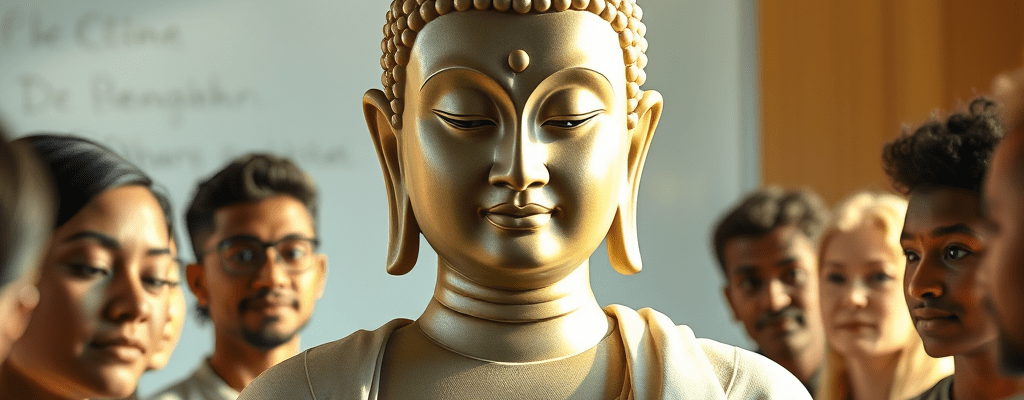
The eighth honorific of the Buddha, Purusa-damya-sarathi, is commonly translated as “The Supreme Trainer of Persons to Be Tamed.” However, I prefer to think of it as the “Tamer of Human Minds.” The human mind possesses immense potential, both awe-inspiring and formidable. When guided by clarity, wisdom, and compassion, it enables people to engage in wholesome actions that bring joy and benefit to many. Conversely, when clouded by greed, hatred, and ignorance, it leads individuals to harm their surroundings and even exploit their fellow beings.
This honorific serves as a reminder of the Buddha’s teachings, which guide humanity along the path of wisdom and compassion. It emphasizes the Buddha’s unmatched ability to lead individuals toward self-realization and liberation. Moreover, it reflects his compassionate role in understanding the unique tendencies and challenges of each being, skillfully adapting his teachings to suit their capacity and readiness for growth.
The Buddha’s methods were not one-size-fits-all; he recognized that each person has unique dispositions, challenges, and strengths. Through his teachings, he provided a path that was not coercive but deeply empowering, allowing individuals to cultivate discipline and insight at their own pace.
1. Individual Growth
By internalizing the qualities of self-discipline and mindfulness, we gain mastery over our emotions and actions. This leads to inner peace, reduced stress, and greater clarity in decision-making. The Buddha’s example as Purusa-damya-sarathi reminds us that self-mastery is not an unattainable ideal but a realistic goal achievable through practice.
2. Harmonizing Relationships
When individuals become self-aware and mindful, their interactions with others improve. Compassion and understanding replace conflict and discord, fostering healthier relationships in families, communities, and societies.
3. A More Compassionate World
On a global scale, the principles inherent in Purusa-damya-sarathi inspire ethical leadership and a collective commitment to addressing suffering. By striving for self-mastery, individuals contribute to creating a society rooted in wisdom, compassion, and mutual respect.
Conclusion
The honorific Purusa-damya-sarathi reminds us of the Buddha’s extraordinary ability to guide individuals toward their highest potential. By contemplating this title, we can draw inspiration to become skillful “tamers” of our own minds. As we cultivate discipline and mindfulness, the benefits ripple outward, transforming not only our lives but also the world around us. The legacy of Purusa-damya-sarathi is a timeless invitation to walk the path of self-mastery with courage, compassion, and unwavering determination.
May all be well and happy.
Categories: Articles
 I am just an ordinary guy in Singapore with a passion for Buddhism and I hope to share this passion with the community out there, across the world.


 Bodhi-Bowl