
What is the meaning of Anatta?

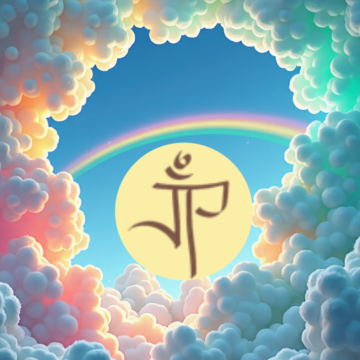
The Buddhist term Anatta is made up of the words “Ah” and atta, “Ah” expresses negation or absence. An equivalent in Chinese is 无/無(Wu) and in English, that will be the word “Non”. In some Buddhist traditions, meditation on this word is important. It can be the Sanskrit syllabus “Ah” or the Chinese Character, but so far I have not heard of any Westerner meditating on the word “NoN”, although that can be done.
The Concept of Atta
Atta is a Pali term that means self or soul. In Sanskrit, it becomes Atman. Those who have exposure to Hinduism will recognize this word. While Hinduism explains that everyone of us has an Atman waiting to merge with the Holy and Ultimate Atman of the Creator, Buddhism tells us that Atman is just an ignorant imagination of humans.
Challenging Our Perception of Reality
This naturally shocks most people because we want to believe there is a permanent self. A soul or “me” that we have been fighting so hard for others to accept and appreciate. If there is no soul or me or presence or “an existence” or “a reality” inside of this body; Then, what is the purpose of all our endeavors since young? Who is falling in love? Who is feeling demotivated at work? Who is suffering right now from a toxic relationship? It contradicts our experience of reality.
Yah, I know. It doesn’t make sense right? And it can be a terrifying idea.
But But But, let’s not panic, shall we?
The Illusion of Memories
Isn’t that “I” or sense of “Self” the very notion that traps us in a toxic relationship? I mean, all those memories we have, those familiarities that have become our daily life experiences and routines. That life is mine and it defines me. I cannot let go of them because they are part of me, part of my life. I cannot even imagine an alternative reality.
Sounds familiar? Sit quietly and know ourselves. Understand how our mind works.
SO THAT “I” Experience that defines who we are, becomes a chain or lasso that binds us to our “reality” or life situation. To an outsider, it seems like we are so stupid to stay in a toxic relationship. “Why can’t he simply walk away from it?”, they asked.
Now, what exactly is “I”? All those memories that define who we are today. All those daily experiences, step by step, shape our persona and life reality. What are they?
Baggage! Mental stuff that we cling to because that is what we are made of. That is why renunciation isn’t easy. Walking away isn’t easy. Most of us are weighed down by them. We love them! We take photos to help us remember those precious moments in life.
But memories are not real. If we have amnesia and lose all our memories, then we will have no problem walking away from someone toxic, right?
Unpacking Our Programming
Therefore, all those accumulated experiences, are just a figment of our “healthy” mental faculty. An illusion that binds us to our self-restricting, self-limiting persona or existence. Life experiences also include the education and indoctrination that we receive at home, in school, and in society.
For example, “If I walk away, then I am a loser! I shouldn’t give up so easily” How did I get programmed to think in that manner? That is why meditation is important. It helps us unravel those “hidden” programming in life.
Suddenly, I realized that that was a remark made by an admirable friend while we were watching a movie together when I was just 16? How lame! And I was living my life according to those words! Believing that that is me! How foolish! How empty! That’s how we end up sobbing while in a meditation retreat.
The Power of Mindfulness
Buddhist meditation on no-self plus various mind-training techniques is simply a therapy for us to unentangle ourselves from all of those illusionary, self-limiting, self-restricting identities. If an addict can do that, then he or she will have the mental strength to recover from addiction. One who is suffering from a toxic relationship will find it easy to walk away.
When we do not latch on to a self-conceived notion of an “I”, then there is no one suffering, no one dying.
In short, our wrong understanding of our existence and reality is the root of all suffering. And it also makes us a horrible person who refuses to change for the better.
Once we learn to let go of our identity, then we are open to changes. But first, we need to stop those habitual tendencies to search our memories for references while living in the present moment. To achieve that, mindfulness is crucial.
Let us try to recollect moments of anger. Perhaps our partner did or said something. Upon experiencing the situation, are you mindful of how your mind reacts? Do you find yourself flashing through past experiences and trying to find a reference to react? Mental Baggage! And after reacting, you find yourself asking, why did I react in that manner?
Embracing Change and Mindfulness
Part of our sense of self is nothing but memories. Mental baggage that we cling to. Maybe we are holding too tightly to our past experiences? Perhaps it is healthier to live mindfully in our present moment and not allow memories to haunt our minds.
We need to have courage, and then objectively break down how we identify ourselves. How does that sense of self arise? Many people identify with their experiences in life? Do you? If yes, remember, those experiences are just a memory now. Are we just made up of memories? Are memories real? Can we transcend them?
Such analysis is a science. It is practical and applicable.
Conclusion
Anatta, the concept of no-self, may initially seem daunting, but it offers a profound understanding of our existence. By acknowledging the illusory nature of memories and our sense of self, we can break free from self-limiting beliefs and embrace a more mindful, present-centered life.
May all be well and happy.
{Inspired by a memory of a question raised in Dharma sharing session}
Categories: Articles
 I am just an ordinary guy in Singapore with a passion for Buddhism and I hope to share this passion with the community out there, across the world.


 Bodhi-Bowl