In our exploration of Shakyamuni’s life, we witnessed Prince Siddhartha finding solace in the serene Sramana’s meditation. Today, we embark on a journey to explore the Sramana way of life, the spiritual independence that characterized ancient India, and the challenges of discerning truth in a landscape filled with diverse doctrines.
The Sramana Way of Life
The term Sramana, or Samana, encapsulates individuals who dedicated themselves to higher or spiritual purposes, free from the constraints of traditional Vedic and Brahmanic religions. It is akin to modern new-age spiritualists who promote unique spiritual practices outside the constraints of established religions.
These spiritual seekers adopted diverse methods such as celibacy, unique dietary practices, meditation, and even extreme asceticism to seek their callings. Unsurprisingly, some of their methods would raise an eyebrow. Nonetheless, their austere lives were revered by the general population since they pursued a purpose beyond the secular.
This created a dynamic social structure whereby individuals were free to experiment with unique spiritual paths while receiving basic care from the secular community.
Prince Siddhartha started his spiritual quest as a Sramana.
Spiritual Independence in Ancient India
Ancient India fostered a culture of religious freedom, allowing Sramanas to flourish with their unique philosophies, doctrines, and appearances. These spiritualists were not bound by formal regulations or dress codes, creating a free market of ideas and practices. This phenomenon echoes in today’s world, where modern gurus continue to emerge, each of them advocating diverse teachings and accumulating followers.
From yoga gurus to those who promote laughing as a way to better health. There is an ample supply of self-made gurus.
The Evolution of Spiritual Doctrines
In ancient times, Sramanas developed their doctrines through contemplation, meditation, reinterpretation of existing myths and philosophies, visions, dreams, inspirations, etc.
The Kalama Sutta highlights the competition among Sramanas. It was common for Sramana to sing his own praises while disparaging his competitors. They would seek out famous Sramana to debate and if they succeeded in winning the debate, then fame and followership would increase too.
There was fluidity in the exchange of ideas and it wasn’t uncommon for Sramana to shape and fine-tune his views per social acceptance and audience reception. Copyright was not there because the Ultimate Truth is free for everyone to discover. One can simply attribute the change in one’s philosophical position to spiritual awakening or upgrading.
After all, it was a game of survivor and career advancement for some of these Sramanas.
The Challenge of Discerning Truth
In ancient society where literacy was limited, oral transmission of teachings was the norm. This led to potential errors and miscommunication. Furthermore, Sramanas might switch teachers and unintentionally spread incorrect views to their new affiliates too.
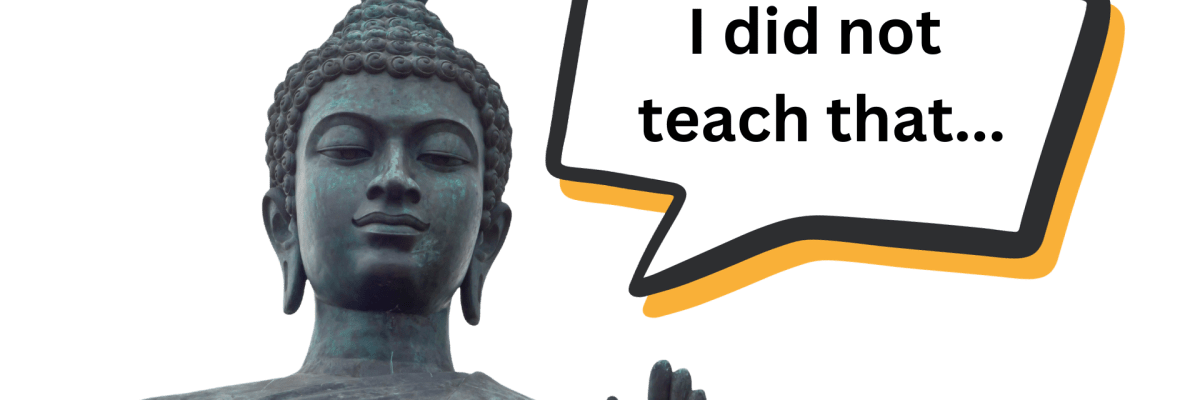
As Buddhism gained traction in ancient India, it was common for Sramana to convert to Buddhism for ease of living. These new recruits might not really care about Buddha’s Dharma and continue to uphold non-Buddhist ideas. This inevitably led to foreign ideologies being planted into Buddhism. Thus, corrupting The Buddha’s words.
The persistence of such challenges continues to the present. We can see much misinformation and fake Buddha quotes inundating the internet. Modern individuals continue to mix foreign ideas into Buddhism. For example, mixing Chinese Feng Shui ideas into Buddhism and advocating that one can only chant sutra during auspicious times.
Conclusion
As we unravel the rich tapestry of Sramana traditions, we find ourselves navigating through the complexities of ancient India’s spiritual landscape. The challenges faced by Buddhists then resonate in our present-day quest for enlightenment.
In our pursuit of authentic knowledge, we must equip ourselves with the Right Understanding to safeguard against misinformation.
May all be well and happy.
Categories: Articles, Shakyamuni Buddha
 I am just an ordinary guy in Singapore with a passion for Buddhism and I hope to share this passion with the community out there, across the world.


 Bodhi-Bowl