Before we proceed, let’s be clear: meditation is beneficial for the mind, just as exercise is beneficial for the body. This series is not an argument against meditation. Rather, it serves as a set of cautions—similar to the guidance you receive at the gym: don’t lift beyond your capacity, progress gradually, watch for fatigue, and take care of your body. These warnings highlight potential risks, but they do not make exercise harmful.
In the same way, these articles explore the potential pitfalls of meditation—things to be aware of as we train and reshape the mind for greater well-being. With that understanding, let us continue.
The title of this article may sound blasphemous to some devout meditators or Buddhists. If you feel slightly offended already, you may be among those who were never given any warning before learning meditation — no caution from a coach, no careful advice from a Dharma teacher, no disclaimer in a book or DIY video.
Recently, I read an article claiming that no one talks about the dangers of meditation. And my immediate reaction was: Huh? There wasn’t?
Perhaps the intention today is not to scare people away. Meditation is marketed as calm, healing, almost universally beneficial. But that was not my experience growing up in the 1980s. Back then, before we even learned how to sit, we were warned.
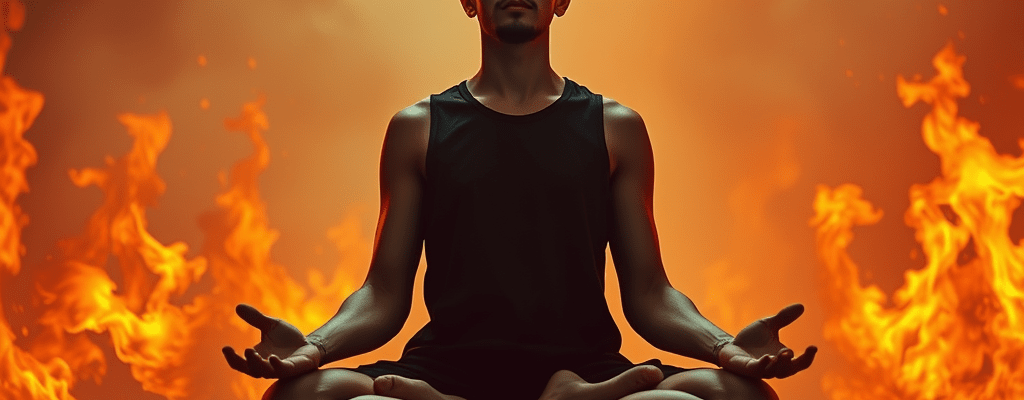
In Chinese Buddhism, there is a phrase: 走火入魔 (Zǒu Huǒ Rù Mó). It literally means “to walk into fire and become Mara.” In everyday language, it describes someone who has gone off the rails mentally — someone who has become obsessive, unbalanced, even deranged through improper practice. The imagery is not gentle. It speaks of fire, danger, possession. The path is not portrayed as a scented candle experience. It is described as something that can burn you.
And that warning is not new.
If we look at the life of the Gautama Buddha himself, the caution is already there. Before awakening, Prince Siddhartha pushed himself to terrifying extremes. He nearly starved himself to death. He experimented with breath retention. He reduced his body to skin and bones in the belief that extreme self-denial would unlock ultimate truth.
In normal circumstances, our body and mind activate self-preservation mechanisms. Hunger signals us to eat. Suffocation forces us to breathe. Pain makes us stop. Yet here was a man overriding all of that with pure mental grit!
We rarely pause to ask the uncomfortable question: what drives someone to such extremes? By modern psychological standards, starving yourself and suppressing your breath would be classified as self-harm. Was he insane? Was he depressed? Was he desperate?
The answer Buddhism gives is not glorification — it is correction.
From that near-fatal mistake comes the central teaching of the Middle Path: do not go to extremes. Neither indulgence nor self-torture leads to liberation. The Buddha did not praise self-destructive behavior. He abandoned it.
This is important.
If someone feels so adverse to life, so desperate to escape their inner pain, that they begin engaging in drastic practices that endanger their well-being — that is not spiritual heroism. That is imbalance. And imbalance is precisely what the Dharma seeks to heal, not celebrate.
However, as Buddhism spread across cultures and centuries, things became less clear. Practices from non-Buddhist traditions — or extreme interpretations by later practitioners — were sometimes absorbed into the broader religious landscape. Acts such as self-immolation, ritual scar-burning, or even self-mummification began appearing in certain historical contexts. Over time, lines blurred. What was cultural? What was symbolic? What was political? What was truly taught by the Buddha?
When everything is woven together, it becomes easy to mistake later extremism for original doctrine.
Which brings us back to the beginning.
Meditation is powerful. Anything that works directly on the mind is powerful. And power, when misunderstood or unguided, can destabilize as easily as it can liberate.
Precisely because it is powerful, Buddhists have always regarded meditation with both reverence and caution. It is not a relaxation hobby. It is a tool designed to break through ignorance and, ultimately, to realize Nirvana — the cessation of suffering. That is an extraordinary claim. And extraordinary tools require clarity of purpose.
This is where we must anchor ourselves.
In Buddhism, meditation is not practiced to accumulate mystical experiences, display endurance, or prove spiritual superiority. It is practiced to end suffering — greed, hatred, delusion. If our practice is intensifying agitation, inflating ego, isolating us from loved ones, or pushing us toward harmful extremes, something has gone off course.
The goal is liberation, not self-punishment. Peace, not obsession.
Remembering the destination helps us assess the journey. If meditation is leading toward greater balance, compassion, and clarity, it is aligned with the path discovered by Gautama Buddha. If it is leading toward rigidity and extremism, then we may need to pause — and recalibrate.
This will be a lengthy discussion, so I’ll explore it across multiple posts. But for now, it is worth remembering: the first warning sign was already there in the Buddha’s own life. The fire was real. And the Middle Path was discovered for a reason.
Therefore, the first sign to watch out for is extremism. It rarely announces itself dramatically. It creeps in quietly — disguised as discipline, devotion, or “going deeper.” And sometimes we cannot see it in ourselves. That is precisely when we need others to point it out.
And by “others,” I don’t mean fellow meditators who are chasing the same intensity, or people who idolise your spiritual dedication. Look at Siddhartha. His meditation companions did not stop him from nearly starving himself to death, did they? They were walking the same path of extremes. To them, his self-denial probably looked admirable.
That should make us pause.
In our spiritual quest, we must not lose basic common sense. Not every warning comes from someone who can quote scriptures. Sometimes wisdom comes from the worried mother, the concerned partner, the honest friend who does not meditate at all — but who can see that something is not right.
The Middle Path is not only a philosophy. It is also a safeguard. And sometimes, the people who love us are its loudest guardians.
May all be well and happy.
To be continued
Danger of Meditation – Part 2 : Becoming sensitive and aware. A curse or blessings? What is the purpose of doing mindfulness meditation? Is your purpose a trigger for more pain?
Danger of Meditation – Part 3: Why it is important to practice Jhana and the danger of Jhana from Buddhist context.
Danger of Meditation – Part 4: Why it is important to practice Vipassana and the danger from misunderstanding Non-I.
Danger of Meditation – Part 5: Third-eye meditation and your sanity. Your breath, posture, and general health. Can’t sleep after doing meditation?
(Feel free to drop a suggestion in case I missed anything, and I’ll try to talk about it if I had learnt it before)
Categories: Articles, Meditation
 I am just an ordinary guy in Singapore with a passion for Buddhism and I hope to share this passion with the community out there, across the world.


 Bodhi-Bowl