The story of Siddhartha’s renunciation had captivated Buddhists and would-be Buddhists for centuries. It remains hotly debated by people because some see renunciation as a negative action. On the other hand, this story also resounds in the minds of those who are weary of secular pursuits. To religious people, this story inspires faith that a higher purpose in life awaits their discovery. Let us continue with the tale of Prince Siddhartha.
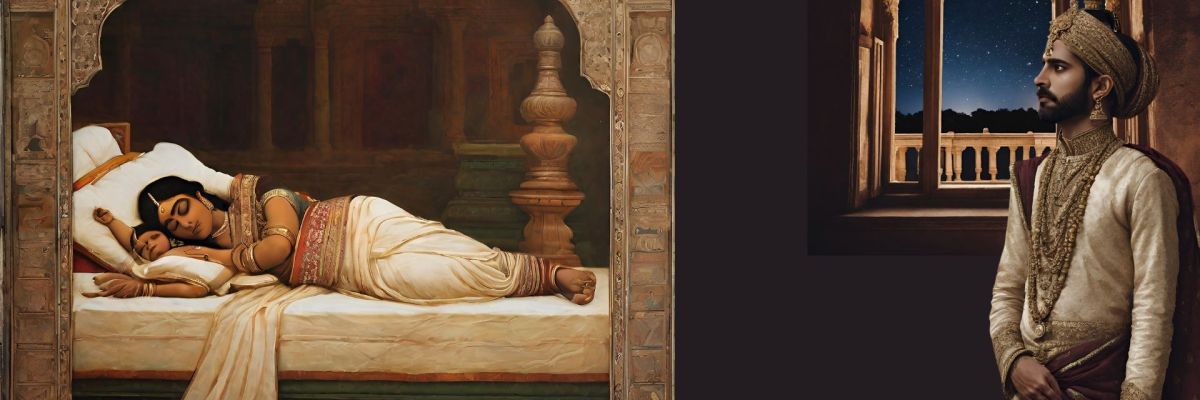
In the quietude of the night, under the ancient canopy of stars, a pivotal moment unfolded that would change the course of history. Siddhartha, the destined heir to the Sakyan throne, stood resolute, ready to cast away the golden chains that bound him to the material world. The journey of renunciation, as profound as it was challenging, began with a decision that echoed through the ages.
As Siddhartha disclosed his intention to leave the opulent palace, the loyal Channa embarked on an act of defiance. Saddling the majestic white steed, Kandaka, Channa embraced the risk of incurring the wrath of King Suddhodana. The loyal steed, born on the same auspicious day as Siddhartha, became the vessel for the prince’s journey into the unknown.
In an era where royal commands could seal fates, Channa’s assistance to Siddhartha marked him as a potential public enemy. King Suddhodana’s aspirations for his son were well-known, and the consequences of hindering a wheel-turning monarch were severe. Distracted by the dire consequences of his actions, Channa over tightened Kandaka’s saddle, and the horse’s neigh reverberated through the silent night.
Unseen by mortal eyes, celestial beings (Devas) worked tirelessly to ensure a smooth passage for Siddhartha. Thus, the neigh of Kandaka did not rouse everyone who was deep in slumber.
Just before Siddhartha’s departure, Vasavatti Mara (a celestial being) appeared to dissuade Siddhartha from his spiritual quest. Firm in his resolve, Siddhartha dismissed Mara’s temptations and chose the path of enlightenment over earthly sovereignty.
The Prince as we know him was someone caring and devotional. The decision to leave his loved ones behind wasn’t an easy one and as he rode out of the city gate, Siddhartha couldn’t stop himself from halting Kandaka, contemplating one last glance at his beloved hometown.
At that crucial moment, he decided against that intent and urged Kandaka to move on without looking back. That spot was later marked with a Buddhist monument to commemorate his unwavering determination. Riding non-stop, Siddhartha reached River Anoma.
At the River Anoma, Kandaka leaped across the water to land safely on the opposite shore. Future generations interpret this event as symbolic of crossing from the secular world to a spiritual life.
In a poignant gesture, Siddhartha removed his jewelry and entrusted them to Channa. Instructing Channa to return to Kapilavastu with his personal belongings and Kandaka. Channa pleaded with Siddhartha to let him stay and thrice, Siddhartha objected to that request.
The climax of Siddhartha’s renunciation unfolded as he took the sword in hand, cutting his hair with a resolution that transcended the physical realm. The remaining hair on his head miraculously curled clockwise. This event was commemorated through the ages in the artwork swirls that adorned Buddha statues.
After severing his hair, Siddhartha tossed the locks into the air and they remained suspended in midair. Sakka, the king of gods, promptly manifested to collect those precious locks for enshrinement in heaven.
Finally, Siddhartha exchanged his noble attire for coarse clothing, shedding the trappings of royalty for the simplicity of a spiritual seeker. With that final act, he transformed his appearance from that of a royal prince to a simple recluse.
Discussion
Vasavatti Mara’s Temptations: Explore the encounter between Siddhartha and Vasavatti Mara. Discuss the temptations Siddhartha faced and how his firm resolve to pursue enlightenment over earthly sovereignty is a crucial moment in the story of enlightenment. Similarly, is conquering temptation vital for our personal success in life?
The Monument at Siddhartha’s Last Glance: Discuss the significance of Siddhartha’s decision not to look back at his beloved hometown during his departure. Explore the commemorative monument and its symbolism in representing Siddhartha’s unwavering determination.
Renunciation by a prince: Discuss the significance of Prince Siddhartha’s renunciation. Does it inspire us to contemplate a higher purpose in life beyond material pursuits? Is this story still relevant in our modern world?
May all be well and happy.
Categories: Articles, Shakyamuni Buddha
 I am just an ordinary guy in Singapore with a passion for Buddhism and I hope to share this passion with the community out there, across the world.


 Bodhi-Bowl